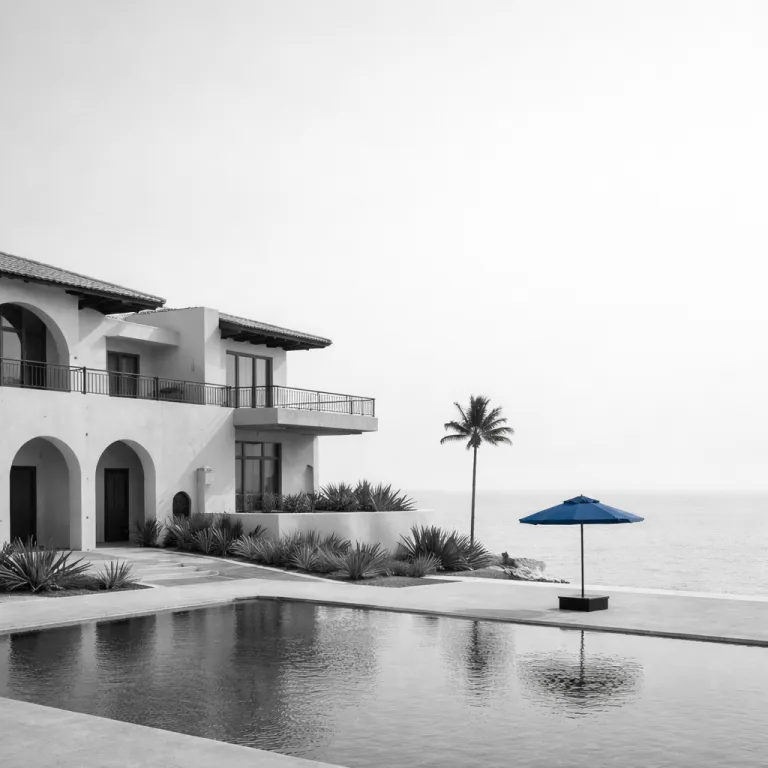
The new language of cabo san lucas hotel architecture design
Cabo San Lucas has moved beyond simple ocean views toward a richer design story. In the most ambitious properties, contemporary Cabo San Lucas hotel architecture now fuses traditional Mexican references with modern lines to create layered experiences for families. This shift is reshaping how you evaluate each hotel in Los Cabos when planning a stay.
Across the corridor between Cabo San Lucas and San José del Cabo, architects treat the desert as a coauthor rather than a backdrop. Low-slung volumes, shaded courtyards and carefully framed views of the landscape turn every walk from room to pool into a small architectural journey. The result is a new generation of luxury resorts and resort residences where the built form, not just the amenities, becomes the reason to choose one property over another.
Design teams working in Los Cabos now draw on both hacienda style and modern minimalism to define each project. You see this in the way a beach resort might pair white stucco walls with rammed earth accents, or how a resort spa uses volcanic stone to ground its sleek glass pavilions. For travelers comparing hotels in the Cabo region, understanding this architecture-first approach helps you match a property’s character to your own family’s travel style.
The hacienda revival at Four Seasons Cabo Del Sol and beyond
The clearest expression of the hacienda revival sits at Four Seasons Resort and Residences Cabo Del Sol, just east of Cabo San Lucas. Opened in 2019 with 96 guest rooms and more than 60 private villas and residences, the project is credited to architect Robert C. Glazier, who shaped the resort as a contemporary house cluster with courtyards, arcades and shaded corridors that echo historic estates in central Mexico. Retractable glass doors erase boundaries so suites open directly to the desert air and the Cabo shoreline.
Inside, the interior design teams Meyer Davis and EDG layer hand-carved wood, woven textiles and stone floors to keep the architecture grounded in place. This is not theme-park nostalgia; it is a calibrated design strategy that uses traditional forms to manage light, acoustics and thermal comfort for families moving between pool, kids’ club and dinner. When you slide open a wall at sunset and the room cools naturally, you feel how thoughtful Cabo San Lucas hotel and resort design can quietly improve every hour of your stay.
Across Los Cabos, other properties reinterpret the hacienda idea in different ways for the same climate. Montage Los Cabos, which debuted in 2018 with roughly 122 rooms and suites, uses casita-style architecture that recalls Baja ranch compounds, while Solaz, a Luxury Collection Resort, leans into sculpted stone terraces stepping down to the sea. Developer and architect materials for these projects highlight passive cooling, cross-ventilation and shaded circulation as core performance goals. Together they show how a hotel in the Cabo corridor can look backward to Mexican heritage yet still feel modern, efficient and unmistakably part of this coastline.
Ánima Village at Cabo Del Sol extends this conversation beyond the resort gate into a cultural and retail area. Its contemporary architecture frames plazas and shaded passages that feel like a modern village rather than a shopping mall, an approach explored in depth in this guide to art and design at Cabo Del Sol. For families, this means you can step from your hotel Los Cabos room into a walkable neighborhood where the same design values continue in cafés, galleries and play-friendly public spaces.
Minimalism in the desert: Amanvari, Viceroy and the new modernism
On the East Cape, Amanvari at Costa Palmas takes a different path, translating Aman’s minimalist language into a desert coastal setting. Planned as a low-density retreat with fewer than 50 freestanding pavilions and a limited collection of branded residences, the architecture pulls back, using slim columns, deep overhangs and elevated platforms to let the landscape breathe underneath. The desert and sea read as equal partners in the project, not just scenery outside a window.
Viceroy Los Cabos in San José del Cabo pushes modernism further, with architect Miguel Ángel Aragonés composing white volumes that seem to float above mirror-like water courts. Originally opened in 2015 as Mar Adentro and rebranded under the Viceroy flag in 2018, the resort now offers about 186 rooms and suites arranged around reflecting pools. The design feels almost abstract, yet it still responds to the intense Baja light by bouncing glare away from rooms and cooling the air around walkways. Guests who appreciate a strong architectural statement will find this kind of Cabo San Lucas hotel architecture as memorable as any whale-watching excursion.
At The Cape, a Thompson Hotel designed by Javier Sánchez and opened in 2015 with 161 rooms, modern lines meet raw materials in a way that suits both surfers and design-focused families. Concrete, timber and glass frame long views toward the arch, while generous terraces function as outdoor living rooms that blur the line between house and hotel. These projects show how a modern resort spa or beach resort in Los Cabos can be both sculptural and deeply practical for multi-generational trips.
Photography by Benjamin Benschneider and other architectural photographers has helped cement these properties in the global design conversation, capturing how light moves across their facades throughout the year. Firms such as Olson Kundig and Studio PCH, even when not leading a given project, influence the regional conversation by championing honest materials and climate-responsive forms. For travelers comparing options from a Marriott Los Cabos tower to a low-rise Nobu Hotel, understanding this modernist thread clarifies why some buildings feel instantly calm while others feel busy.
Nobu Hotel Los Cabos and the rise of branded design narratives
Nobu Hotel Los Cabos sits at the point where global brand identity meets the specific landscape of Cabo San Lucas. Designed by WATG with interiors by Wimberly Interiors and opened in 2019 with 200 guest rooms and suites, the project weaves Japanese-inspired minimalism into a Mexican desert palette of stone, wood and sand-toned textiles. The Nobu brand becomes a narrative layer in the architecture, but the building still speaks fluently with the surrounding dunes and Pacific beachfront.
Guest rooms and resort residences at this hotel Los Cabos property use clean lines and low furniture to keep sightlines open toward the ocean. Sliding screens, deep balconies and carefully placed planters act as a kind of soft rammed-earth buffer, filtering wind and light without blocking the view. Families notice the effect not as a design gesture, but as a room that stays comfortable through the hottest part of the day without feeling sealed off.
Public spaces at Nobu Hotel Los Cabos show how interior design and architecture can merge into a single experience. Restaurants step down toward the sea in terraces, so every table feels close to the landscape while acoustics remain controlled for conversation. Pools, fire pits and spa pavilions are arranged as a sequence of outdoor rooms, turning the entire resort spa into a walkable, house-scale village rather than a single monolithic block.
This branded approach contrasts with more conventional Marriott Los Cabos towers, where repetition and height often dominate the skyline. Yet even there, newer renovations are borrowing cues from Nobu Hotel and similar properties, softening facades and adding shaded outdoor lounges. For travelers, the lesson is clear; Cabo San Lucas hotel architecture and planning are now competitive differentiators, and the most thoughtful projects use brand stories to deepen, not distract from, the sense of place.
Indoor outdoor living, local materials and how design shapes your stay
Across Los Cabos, indoor-outdoor living has shifted from amenity to architectural imperative. Retractable walls, outdoor showers and courtyard-focused layouts are no longer reserved for top-tier suites; they now define the baseline for serious luxury. This matters for families because circulation, shade and breezes become as important as thread count when you are moving children between nap time and the pool.
Local materials anchor this evolution in something more lasting than trend-driven styling. Volcanic rock, reclaimed wood and hand-forged ironwork appear in everything from stair rails to headboards, giving each hotel in Cabo San Lucas a tactile link to Mexico rather than a generic international look. As one regional guide explains, "What defines hacienda-style architecture? Traditional Mexican estates with courtyards and arches."
Those courtyards and arches are not just visual references; they are performance tools. They shape acoustics by breaking up noise from bars and pools, they modulate light so rooms glow instead of glare, and they create microclimates where the desert heat softens in the shade. When you compare properties on a site like stay-in-cabo-san-lucas.com, especially through features such as this analysis of how Riviera Maya luxury influences Cabo stays at Secrets Capri Hotel Mexico reimagined, you start to see Cabo San Lucas hotel architecture and design as a set of practical decisions rather than just aesthetics.
For families choosing between a high-rise in the Cabo area and a low-slung house-style resort on the beach, the trade-offs become clear. Taller buildings may offer dramatic views, but they can struggle with wind, noise and long elevator rides with strollers, while courtyard-based resorts keep everything at a human scale. Paying attention to architecture, from the first sketch of a project to the final interior design details, is now one of the most reliable ways to predict how your Los Cabos holiday will actually feel day to day.
FAQ
What defines hacienda style architecture in Cabo’s new hotels ?
Hacienda style architecture in Cabo’s new hotels usually means low-rise buildings organized around courtyards, arcades and shaded corridors. Traditional elements such as arches, thick walls and clay roof tiles are reinterpreted with modern materials to manage heat and light. Properties like Four Seasons Cabo Del Sol and Montage Los Cabos use this language to create calm, walkable environments that suit families.
How does modern minimalist design work in a desert coastal setting ?
Modern minimalist design in Cabo relies on simple volumes, deep overhangs and large glass openings that frame the desert and sea. Architects use materials such as concrete, stone and timber in honest ways, letting texture and shadow do most of the visual work. Resorts like Amanvari, Viceroy Los Cabos and The Cape show how this approach can feel both sculptural and comfortable in strong sun and wind.
Why are indoor outdoor spaces so important for Cabo hotels ?
Indoor outdoor spaces are crucial in Cabo because the climate allows for open-air living most of the year. Courtyards, terraces and retractable walls help manage temperature naturally, reducing reliance on air conditioning while keeping guests connected to the landscape. For families, this means more flexible spaces where children can move easily between room, pool and play areas without long internal corridors.
Which Cabo hotels best express the blend of tradition and modernity ?
Four Seasons Cabo Del Sol, Solaz Los Cabos, Viceroy Los Cabos, The Cape and Nobu Hotel Los Cabos are leading examples of this blend. Each property uses traditional references, whether hacienda courtyards or local stone, alongside contemporary layouts and technology. When you compare them, you see how Cabo San Lucas hotel architecture has become a spectrum rather than a single style.
How can I use architecture to choose the right hotel for my family ?
Start by deciding whether your family prefers a compact, courtyard-based resort or a taller tower with expansive views. Look at site plans and photos to see how far rooms are from pools, kids’ clubs and the beach, and whether circulation is mostly outdoors or through air-conditioned corridors. Paying attention to materials, shade and the presence of real gardens or courtyards will give you a strong sense of how comfortable day-to-day life will feel once you arrive.
Suggested sources for further reading: Baja California Sur Tourism Board, local hospitality reports on new hotel openings in Los Cabos, and architectural profiles from WATG, Wimberly Interiors and other design firms involved in the region.