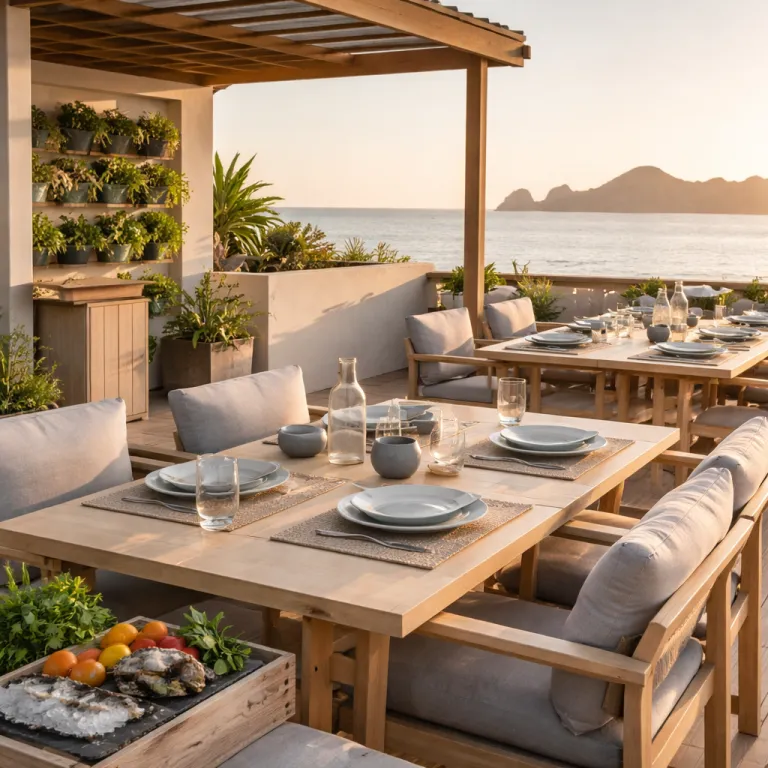
From award stages to open air fields: how Cabo’s luxury scene is rethinking food
Cabo San Lucas sustainable dining has moved from marketing slogan to measurable standard. The new Gastronomic Sustainability category at the Los Cabos Culinary Awards, with 21 table restaurants participating in its inaugural 2023 edition according to Tendencia Magazine’s event recap (“Los Cabos Culinary Awards 2023,” Tendencia, November 2023), signals that the region is finally judging luxury by more than ocean views. For travelers choosing a premium hotel in Cabo or San Lucas, the question is no longer just which restaurant offers the best view, but which kitchen is quietly rewriting how the destination eats.
On the surface, the awards echo global shifts like Michelin Green Stars, Copenhagen’s food waste revolution, and Noma’s pivot away from traditional fine dining. Underneath, they respond to a very local reality in Los Cabos, where a municipal cleanup campaign removed 594 tons of trash in only three days, as reported by the local tourism board and regional press in an official 2022 cleanup bulletin, forcing hotels and every farm restaurant to confront their footprint. When roughly a quarter of restaurants in Cabo San Lucas already offer some form of sustainable or farm table dining, according to tourism board estimates published in its 2023 sustainability overview, the awards formalize a movement that guests can now evaluate and reward with every booked stay.
For business leisure travelers extending meetings into long weekends, this matters. You are often entertaining clients at a table restaurant, signing a contract over a tasting menu, or charging a multi course dinner to a corporate credit card. Choosing properties that align with Cabo San Lucas sustainable dining principles lets you turn those meals into part of your ESG story, not a quiet contradiction of it.
Gastronomic sustainability in this region means more than a token organic farm garnish. It covers how a restaurant sources from local farms, manages water in a desert climate, handles food waste, and supports communities from San José del Cabo to the Pacific side. When environmental studies show that farm to table restaurants can cut their carbon footprint by around 30 percent, such as comparative lifecycle analyses of local versus imported supply chains summarized in regional environmental reports, the shift from imported to locally sourced ingredients stops being a lifestyle choice and becomes a strategic decision for every luxury hotel kitchen.
Leading properties now treat their food systems with the same seriousness as their spa programs or butler service. Some, like Grand Velas in Los Cabos, convert used cooking oils into biodiesel and install EV charging stations, proving that back of house decisions can be as refined as any tasting menu. “In 2023 alone, we diverted more than 18 tons of organic waste from landfill through composting and oil recovery,” notes a Grand Velas Los Cabos sustainability manager in internal reporting shared with the Los Cabos Hotel Association, underscoring that these efforts are tracked, not just promised. For guests, the opportunity is clear; by asking sharper questions and choosing carefully, you can nudge the entire Cabo San Lucas sustainable dining ecosystem toward higher standards without sacrificing pleasure.
Field kitchens and farm tables: where luxury meets the soil
The most convincing expression of Cabo San Lucas sustainable dining happens not on the marina, but in the fields between San José and San Lucas. Here, Acre, Flora Farms, Huerto Farm and Los Tamarindos have turned the idea of a farm table into a full sensory experience, where you walk past rows of basil and chilies before you even see the bar. These open air spaces feel more like a desert garden party than a conventional restaurant, yet they now shape what the best Mexican food means in Baja California.
At Flora Farms, the Flora Field Kitchen anchors a working organic farm that supplies its own menus and several partner properties across Los Cabos. The Flora Field Bar, bakery and butcher extend that field kitchen philosophy into cocktails, bread and charcuterie, making every plate a quiet lesson in locally sourced abundance. When you book a table here, you are not just reserving a seat; you are buying into a supply chain that keeps pesos circulating in the region instead of on imported produce.
El Huerto Farm to Table Restaurant, set on several cultivated acres just outside Cabo San Lucas, offers a similar immersion. The restaurant’s seasonal menu leans on what the huerto, or garden, can provide that week, from squash blossoms to heirloom tomatoes, and the kitchen designs dishes backwards from what the soil gives. For guests staying in high end villas such as those highlighted in guides to an elevated luxury villa experience in Cabo San Lucas, these farm restaurants become essential off property dining rooms, where you can arrive from a private pool and still feel grounded in the land.
Los Tamarindos, located near San José del Cabo, occupies a historic farm del cabo where tamarind trees shade long communal tables and a rustic field kitchen. Here, cooking classes and chef led tours of the organic farm blur the line between restaurant and workshop, turning guests into temporary stewards of the land. The result is a style of Cabo San Lucas sustainable dining where the farm, the table, and the restaurant are inseparable, and where luxury is measured in soil health as much as in wine lists.
For business travelers, these places offer more than Instagram friendly rows of carrots. They provide discreet, open air settings for client dinners, where the conversation can move from quarterly results to the future of responsible tourism without feeling forced. When you swipe your credit card at a farm restaurant like Flora Farms or El Huerto, you are underwriting a model that keeps water use, waste and energy in constant check, and that is a story worth sharing back at the office.
Hotel kitchens under pressure: reconciling white tablecloths with desert limits
Luxury hotel kitchens in Cabo San Lucas now operate under a new kind of scrutiny. Guests who spend their days at farm restaurants like Flora Farms or Huerto Farm arrive back at their resorts expecting the same commitment to locally sourced ingredients and thoughtful waste management. The tension lies in reconciling that expectation with the traditional grammar of fine dining, which often relies on imported caviar, flown in berries and elaborate presentations that strain a fragile desert ecosystem.
Some properties are responding with quiet but meaningful shifts behind the scenes. Grand Velas Los Cabos, for example, converts used cooking oils into biodiesel and supports electric mobility with EV charging stations, proving that sustainability can start in the grease trap and end in the parking lot. When a resort can show that its kitchen reduces waste while still plating multi course tasting menus, it sends a signal that Cabo San Lucas sustainable dining is compatible with white tablecloth service.
Restaurants like Manta by Enrique Olvera, perched above the waves near Cabo San Lucas, demonstrate how a high concept kitchen can still honor the region. The menu leans into the best Mexican seafood and produce from Baja California, working with sustainable suppliers instead of defaulting to imports from distant oceans. This approach mirrors the ethos of El Huerto and Tomatillos Restaurant, where farm to table sourcing and seasonal adaptation are not trends but operating principles.
For travelers booking premium stays such as refined luxury villas in Cabo San Lucas, the question becomes how to read between the lines of a hotel’s marketing. Does the property name specific local farms, such as Flora Farms or Huerto Farm, on its menus, or does it rely on vague references to “fresh” and “local” food? Does the kitchen team talk openly about composting systems, water saving dishwashing technology and partnerships with organic farm suppliers, or is sustainability confined to a single salad description?
The most credible properties now publish clear sourcing philosophies and train staff to speak confidently about them at the table. They highlight when a restaurant offers open air seating to reduce cooling loads, or when a field kitchen concept allows for wood fired cooking that uses sustainably managed timber. For guests, this transparency turns every dinner into a small audit of Cabo San Lucas sustainable dining claims, and the best hotels welcome that scrutiny rather than deflect it.
How to book for impact: a practical playbook for Cabo’s conscious luxury diner
Turning your next trip into a statement on Cabo San Lucas sustainable dining starts long before you sit down to eat. It begins when you choose a hotel, villa or resort and ask pointed questions about how their restaurants source, cook and manage waste. For executives used to scanning ESG reports, this is simply applying the same rigor to your leisure time that you apply to your portfolio.
Start with sourcing. When you email a concierge or reservations team, ask which table restaurants on property or nearby work directly with local farms such as Flora Farms, Huerto Farm or Acre. A credible answer will reference specific partners, seasonal menus, and sometimes even the exact organic farm plots that supply herbs, greens and chilies to the kitchen.
Next, look at water, energy and waste. In a desert region like Baja California Sur, a hotel that supports Cabo San Lucas sustainable dining will often pair its food philosophy with broader environmental measures, from low flow dishwashing systems to solar panels above back of house corridors. Some properties now share how much food waste they divert from landfill through composting, echoing global leaders in Copenhagen and other cities that have turned waste reduction into a culinary art.
Then, plan your off property meals with the same care. Book a table at Flora Field Kitchen, El Huerto Farm to Table Restaurant or Los Tamarindos on nights when you want to feel the open air and hear the rustle of fields instead of the hum of air conditioning. Balance those evenings with one or two high end marina dinners, choosing places like Manta that foreground locally sourced seafood and regional flavors rather than generic international menus.
Finally, remember that sustainability in Cabo extends beyond the plate. The way you move between San José del Cabo, Cabo San Lucas and the corridor, the excursions you choose, even how you think about the water temperature and marine life all shape your impact; resources on how Cabo’s water temperature shapes luxury stays and sea experiences can help you align your ocean time with your dining choices. When you treat every credit card slip as a vote for the kind of Los Cabos you want to return to, you turn business leisure into a quiet but powerful form of advocacy for the region’s future.
Key figures shaping Cabo San Lucas sustainable dining
- Approximately 25 percent of restaurants in Cabo San Lucas now offer some form of sustainable or farm to table dining option, according to the local tourism board’s 2023 sustainability overview, indicating that one in four dinner reservations can directly support more responsible food systems.
- Environmental studies show that farm to table restaurants can reduce their carbon footprint by around 30 percent compared with conventional operations, meaning that choosing a farm restaurant in Los Cabos can significantly lower the emissions associated with your meal.
- During a focused cleanup effort in Los Cabos, 594 tons of trash were removed in just three days, a stark reminder that the region’s waste crisis is real and that every restaurant’s approach to packaging, leftovers and sourcing has measurable consequences.
- The Gastronomic Sustainability category at the Los Cabos Culinary Awards launched with 21 participating restaurants, as documented in Tendencia Magazine’s coverage of the ceremony, demonstrating that a critical mass of kitchens across San José del Cabo and Cabo San Lucas are ready to be evaluated on sourcing, water, energy and community impact.
References
- Tendencia Magazine – coverage of the Los Cabos Culinary Awards and the Gastronomic Sustainability category, including the initial 21 participating restaurants (“Los Cabos Culinary Awards 2023,” Tendencia, November 2023).
- Local tourism board of Los Cabos – data on sustainable and farm to table restaurant adoption and regional cleanup campaigns, as summarized in the 2022 cleanup bulletin and 2023 sustainability overview.
- Regional environmental studies on carbon footprint reduction in farm to table dining models and hotel sustainability reporting from properties such as Grand Velas Los Cabos, including internal waste diversion figures shared with the Los Cabos Hotel Association.