The mission San José del Cabo history that shaped a resort city
Stand in the plaza of San José del Cabo and the resort skyline of Los Cabos suddenly feels very far away. The modest white façade of the mission church anchors the city, yet many visitors hurry past on their way to the gallery district or dinner. Taking time to explore the mission’s past changes how you read every street, every archway, every shadowed portal around you.
The story begins in the early eighteenth century, when Spanish Jesuit missionaries pushed down the spine of Baja California, searching for safe anchorages and souls to convert. In 1730, according to Jesuit reports compiled by Miguel del Barco and later summarized by Harry Crosby, they founded what was then called the Misión de San José del Cabo Añuití near the coastal estuary. Here at the southern tip of Baja California Sur, the Jesuit order saw a strategic oasis that could support the Manila galleon route between Asia and New Spain. Their purpose was clear: spread Christianity, secure the coast for the Spanish Crown, and turn a seasonal watering stop into a permanent colonial settlement.
Jesuit missionary Nicolás Tamaral and visiting priest José de Echeverría led this effort, working among the Pericú people who had fished these coasts long before any mission church rose above the palms. Contemporary accounts describe rapid waves of baptisms among Pericú communities, a pace that signals both missionary zeal and intense pressure in this early phase of Jesuit expansion. That collision between Spanish colonial ambition and local Pericú culture still echoes in the quiet of the current church, even as Cabo San Lucas and the wider Los Cabos corridor project a very different image of Cabo México today.
Jesuits, Pericúes and the contested birth of San José del Cabo
To grasp the deeper mission San José del Cabo history, you need to picture this coast before the resorts and paved roads. The estuary at Las Palmas and the nearby arroyos offered fresh water, palms, and shelter, which made the area vital for both Pericú communities and passing Spanish ships. When the Jesuit missions advanced through Baja California, this southernmost Jesuit outpost became a flashpoint rather than a quiet backwater.
The Misión San José del Cabo Añuití was established with three intertwined objectives: evangelize the Pericúes, support the transpacific trade, and anchor Spanish control in what was then called California. Methods were classic for the era, blending religious conversion, agricultural development, and cultural assimilation into a single colonial project. The mission church and its surrounding buildings were not just places of worship but also tools of administration, where local converts were taught new crops, new routines, and new loyalties.
That process met fierce resistance, culminating in uprisings that reshaped the mission narrative and the wider history of Baja California Sur. In 1734–1737, the Pericú rebellion targeted several missions, including San José del Cabo and the mission at Santiago further up the coast, and it cost the life of Father Tamaral, killed near the estuary in 1734. Today, when you walk from the Cabo church steps toward the water, it is worth remembering that the calm surface of this city hides a past of conflict between Spanish authority and local autonomy, a tension that still informs how San José del Cabo balances heritage with tourism.
For travelers pairing culture with coastline, this historic core also sits within easy reach of quieter beaches ideal for reflective afternoons. If you want to move from colonial history to sea and sand, our guide to Cabo’s quieter beaches and snorkeling coves helps you choose stretches of coast that feel as unhurried as the plaza at dusk. That contrast between the mission city and the nearby shorelines is part of what makes this corner of Cabo Añuití country so compelling for thoughtful travelers. The same desert light that washes the church façade also gilds the tide pools and reefs just a short drive away.
What remains today ; church, plaza and a mural that does not flinch
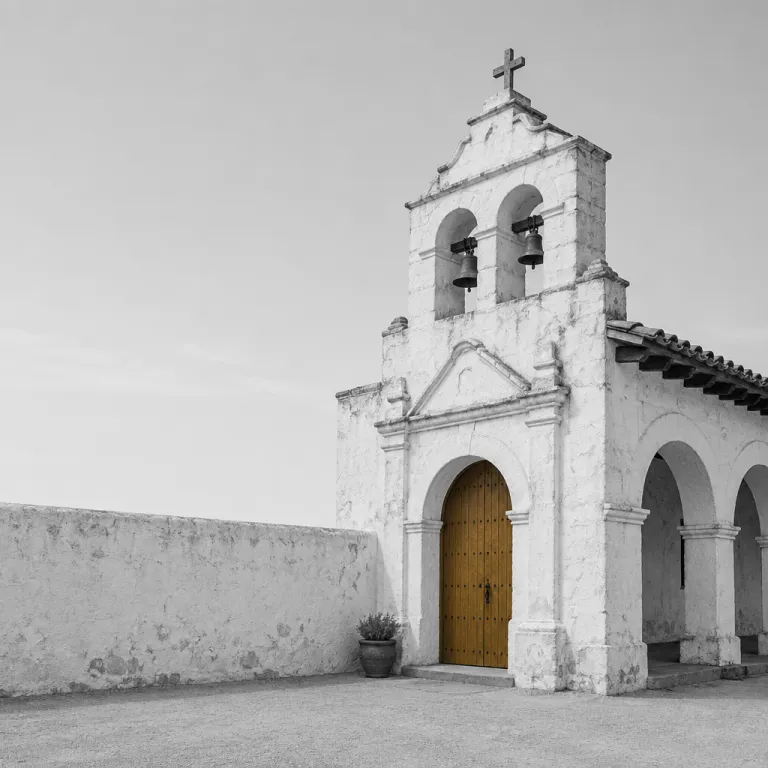
Step inside the present mission church of San José del Cabo and you are not entering the original structure, but you are entering the same story. Floods, epidemics, and relocations forced the mission to move and rebuild several times, leaving only fragments of the earliest buildings in this part of California Sur. Yet the current church still functions as the spiritual and symbolic heart of the city, tying the modern streets back to the first Jesuit outpost on this coast.
The façade facing the plaza carries one of the most striking details in the mission San José del Cabo history: a mosaic panel that depicts the martyrdom of Father Tamaral at the hands of Pericú rebels. Official guides often summarize it simply: “It features a mosaic depicting the martyrdom of Father Tamaral.” That image, set above the main entrance, forces visitors to confront the violence that accompanied the spread of Spanish missions in Baja, rather than smoothing it into a romantic colonial postcard.
Inside, the nave is simple, with whitewashed walls and modest ornamentation that contrasts sharply with the excess of some Cabo San Lucas resort chapels. Look up and you will see painted scenes that reference Nuestra Señora, the Virgin to whom many Baja missions were dedicated, and smaller details that nod to both Spanish and local influences. Outside, the plaza in front of the Cabo church has become a social salon for the city, ringed by cafés, restaurants, and galleries that form the now famous gallery district, and timing your visit for the golden hour before dinner lets you see the mission church glow while the square slowly fills with both residents and travelers.
If you are planning when to come, early evenings in the dry season offer the most comfortable temperatures for walking the city. Our seasonal guide to visiting Cabo in early summer explains how light, heat, and crowds shift through the year. Use that context to choose whether you want the plaza almost to yourself or prefer the energy of cultural festivals and night markets that often spill out around the mission church. Either way, the mural and the square repay slow, attentive time.
Walking the mission and the art ; how to visit with intention
Most travelers meet the mission San José del Cabo history in passing, on the way to dinner in the gallery district or a cocktail on a shaded terrace. You can do better than that with a simple, self-guided loop that starts at the church steps and spirals through the colonial grid. Begin at the front of the mission church, take in the Tamaral mosaic, then circle the building to notice how the structure sits slightly above the surrounding streets, a reminder of past floods that once destroyed earlier missions.
From there, wander toward the estuary side of the city, where the land dips and the palms of the old Las Palmas area still hint at the oasis that first drew both Pericú communities and Spanish ships. A slow walk of less than two kilometres lets you feel the transition from the sacred core to the more everyday parts of San José del Cabo, where local families shop, children play, and the mission fades into background rather than spectacle. If you prefer context, several guides in Cabo México offer small group tours that link the mission story with food tastings, art visits, and even short drives out toward mission Santiago or other historic sites in Baja California Sur.
Luxury travelers who base themselves in Cabo San Lucas or along the corridor can easily fold this visit into a broader itinerary. Our in-depth neighborhood guide to where to stay in Cabo San Lucas helps you choose a property that makes day trips to the mission city effortless, whether you prefer Medano’s energy or the quieter East Cape. Arrange a private transfer through your hotel concierge, ask to be dropped near the plaza, then give yourself at least two hours to move between the mission church, the gallery district, and a lingering meal in one of the courtyards that line José del boulevard. The goal is not to tick off a sight but to feel how the colonial city and the modern resort destination coexist.
Beyond one church ; the Baja mission trail and why it matters for luxury stays
Seen in isolation, the mission San José del Cabo history is compelling; seen as part of a chain of missions across Baja, it becomes essential. Jesuit missions once stepped north from this southernmost Jesuit outpost toward Todos Santos, La Paz, and beyond, creating a loose spine of mission churches that structured settlement in what is now Baja California Sur. Travelers who care about sense of place can still trace that line today, linking San José del Cabo with mission Santiago inland, the mission at Todos Santos on the Pacific side, and the historic core of La Paz on the gulf.
For guests staying in high-end properties in Cabo San Lucas or the wider Los Cabos area, this mission trail offers a counterpoint to pool days and yacht charters. A day that begins with sunrise over the arch at San Lucas, continues with a drive through the desert interior, and ends in the cool nave of a mission church in a small city delivers a far richer understanding of Cabo México than any single resort can. It also highlights how fragile this landscape is, from the flood-prone arroyos that once damaged the mission at San José del Cabo to the dry hills that still challenge communities in sur and norte alike.
Engaging with this history does not mean sacrificing comfort; it means asking your concierge to arrange guides who can speak about both colonial archives and contemporary local life. Some of the most rewarding itineraries pair a morning in the mission San José del Cabo area with an afternoon at a vineyard-style property inland or a low-key lunch stop in a town where Nuestra Señora still presides over a small plaza. In doing so, you move beyond the surface of Cabo Añuití marketing and into a more layered relationship with México, one where the past of California and the present of Cabo San Lucas sit in honest, sometimes uneasy, conversation.
FAQ
Why was the mission San José del Cabo relocated from its original site ?
The earliest phase of the mission San José del Cabo history unfolded closer to the coast, near areas that later became known for the estuary and Las Palmas groves. That first location turned out to be unhealthy, with issues related to water quality, flooding, and disease that threatened both missionaries and local converts. As a result, the mission was moved slightly inland to a more stable site, where the present city center and mission church now stand.
What events led to the destruction and rebuilding of the mission ?
Over the centuries, the mission story has been marked by both human conflict and natural forces. Pericú uprisings in the early period damaged several missions in Baja California, while later floods devastated the structures at San José del Cabo and forced major reconstruction. By the end of the eighteenth century, a combination of epidemics, storms, and changing colonial priorities meant that the mission had to be rebuilt in simpler form, leaving the more modest church that anchors the city today.
What is the significance of the mosaic on the mission façade ?
The mosaic above the main entrance of the mission church in San José del Cabo is one of the most discussed details for visitors interested in Jesuit missions. It portrays the killing of Father Nicolás Tamaral during a Pericú rebellion in 1734, a moment that crystallizes the violence of the colonial encounter in Baja California Sur. As local guides explain, “What is the significance of the mission's facade? It features a mosaic depicting the martyrdom of Father Tamaral.”
How can luxury travelers integrate the mission into a Cabo itinerary ?
For guests staying in Cabo San Lucas or along the corridor, the mission San José del Cabo history works best as a half-day cultural anchor. Arrange a private car through your hotel, visit the mission church and plaza in the late afternoon, then stay for dinner in the gallery district before returning to your property. This pattern keeps travel times short, respects the slower rhythm of the historic city, and adds depth to a stay that might otherwise focus only on beaches and nightlife.
How does the mission connect to other historic sites in Los Cabos ?
The mission at San José del Cabo forms part of a broader network of colonial sites that structure the heritage landscape of Los Cabos and southern Baja. From here, you can travel to mission Santiago inland, explore the historic center of Todos Santos on the Pacific side, or continue to La Paz, where other mission churches and civic buildings tell related stories. Linking these places in a single trip reveals how the same forces that shaped one small city also shaped the entire region now marketed simply as Cabo.
Historical notes: Dates and events referenced here draw on Jesuit chronicles such as Miguel del Barco’s eighteenth-century account and modern syntheses by historians including Harry W. Crosby, who detail the 1730 founding of the mission and the 1734–1737 Pericú revolt.