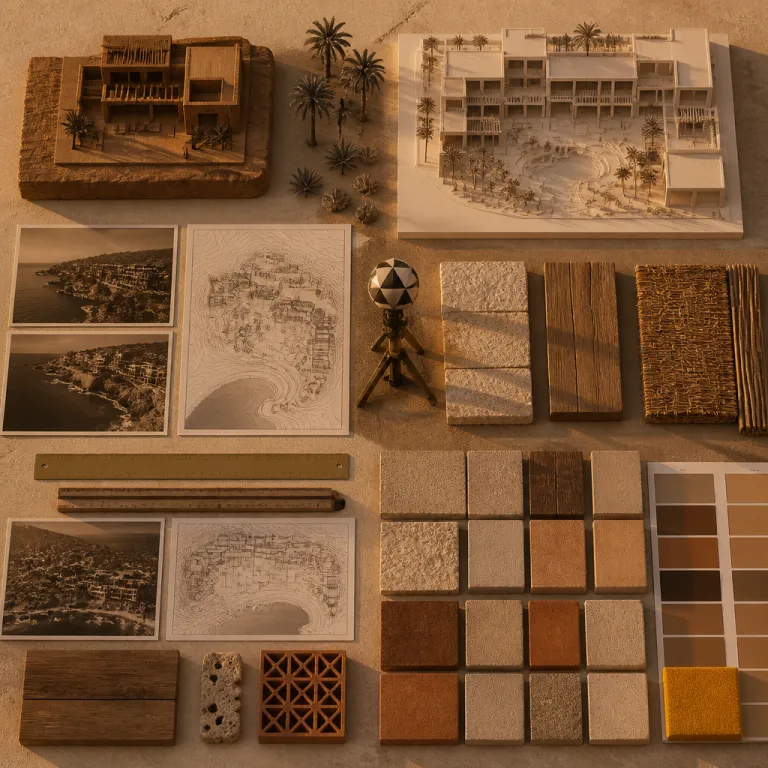
The new face of cabo san lucas hotel architecture
Cabo San Lucas hotel architecture has shifted from anonymous towers to crafted, landscape-led spaces. In Los Cabos today, the best hotels treat every dune, rock outcrop and beach cove as a design brief rather than a backdrop. That change matters if you are choosing a Cabo stay for both business meetings and quiet leisure hours.
Across Cabo San Lucas and the wider Los Cabos region, architects now work with the desert rather than against it. Low-slung volumes step down toward the sea, courtyards pull in breezes, and long shaded arcades replace the old wall-to-wall resort slab, so the overall composition feels closer to the natural landscape. This new generation of luxury Cabo properties shows how thoughtful design can turn a standard beach resort into a place where you actually feel the Baja California Sur peninsula under your feet.
For travelers, that means coastal hotel design here is no longer a generic resort-spa formula. You will see raw concrete paired with local stone, timber screens filtering the sun, and pools aligned precisely with the sunset over the headlands near Cabo San Lucas. When you scroll through any hotel photo gallery, look for how each project frames the ocean and desert rather than just the pool; that simple check quickly separates the merely new from the genuinely considered places design-focused travelers talk about long after checkout.
Global names, local ground: from WATG to Mexican studios
The renaissance in Cabo San Lucas hotel architecture is being driven by a mix of heavyweight international firms and sharp Mexican studios. Global practice WATG, for example, shaped the Nobu Hotel Los Cabos (opened 2019, according to the resort’s own timeline) as a calm, horizontal composition that fuses Japanese minimalism with the Baja landscape. Their work shows that when architects listen to both culture and climate, a large resort can still feel intimately connected to the dunes and sea of Los Cabos.
Mexican firms are no longer supporting actors in the region; they are leading many of the most interesting projects. JSa Arquitectura brought a crisp, modern Mexican design language to The Cape, a Thompson Hotel (2015, as listed in the property’s opening announcements), using strong geometries and deep overhangs to frame the endless horizon off San Lucas, while Sordo Madaleno Arquitectos tuned Solaz, a Luxury Collection Resort, Los Cabos (2018, per Marriott’s project notes) to the topography so closely that its roofs read almost as extensions of the terrain. Local studio CABOFORM, working across the Cabo San Lucas corridor, focuses on luxury residential and hotel projects that keep the architecture low, tactile and rooted in Mexico rather than imported from generic North American templates.
Further up the coast, new developments such as Park Hyatt Cabo del Sol and Anima Village signal how design-forward thinking is reshaping the corridor between Cabo San Lucas and San José del Cabo. If you are curious about how art, design and hospitality intersect in this area, the detailed coverage of Anima Village at Cabo del Sol is an excellent lens on this shift. As architecture critic Paul Goldberger has noted in his writing on resort design, “the best hotels are not escapes from a place but deep immersions in it,” and together these projects show that contemporary Cabo San Lucas hotel architecture now reflects a deliberate choice to privilege context, with architects treating every new site as a chance to refine how luxury and landscape meet.
Materials, light and the hacienda meets modernism tension
Walk into the lobby of almost any leading resort spa in Cabo today and you will feel a quiet tension between hacienda references and stripped-back modernism. Some properties lean into arches, courtyards and thick walls, while others prefer clean planes and glass, yet the most successful Cabo San Lucas hotel architecture blends both attitudes. This is where Mexican architects, from Rábago Arquitectos at Cabo Corazón Hotel to RA! at Laiva Plaza Hotel, show a particular fluency with local history and contemporary expectations.
Instead of imported marble and shiny chandeliers, the best hotels now specify local stone, textured plaster and reclaimed wood that echo the surrounding beach cliffs and desert washes. At Solaz Los Cabos, for instance, Sordo Madaleno Arquitectos use layered terraces and rough stone to make the resort feel carved from the landscape rather than dropped onto it, while The Cape by JSa Arquitectura uses dark timber and concrete to frame each photo-worthy view of Cabo San Lucas. These material choices are not just aesthetic; they moderate heat, soften acoustics and create a more grounded sense of luxury for guests who might be coming straight from a boardroom in North America.
If you want to understand how this hacienda-meets-modernism dialogue plays out across Los Cabos, the in-depth feature on the architecture defining Cabo’s newest hotels is essential reading. It highlights how architects balance privacy and openness, using courtyards, screens and split-level suites so that each room feels both connected to the ocean and sheltered from neighboring terraces. For travelers, this means that Cabo San Lucas hotel architecture now directly shapes how you sleep, work and unwind, rather than serving as a neutral backdrop.
How design shapes the guest experience, from casitas to corridors
Architecture in Cabo San Lucas is no longer just about façades; it choreographs how you move, breathe and even hear the ocean during your stay. Properties such as Amanvari on the East Cape use freestanding casitas lifted lightly above the sand, so breezes slide underneath and through, reducing the need for constant air conditioning while keeping views to the coastline of Los Cabos wide open. That same philosophy informs the layout of many new beach resort projects, where paths meander through native planting instead of marching in straight lines from lobby to pool.
Natural ventilation, deep shade and indoor–outdoor flow are now central to Cabo San Lucas hotel architecture, especially in luxury properties that want to feel more like private retreats than convention centers. Architects design long, narrow suites so that both bedroom and living area face the sea, while bathrooms open to walled gardens, giving you a sense of seclusion even in a large resort. When you review any hotel photo set, look for operable windows, shaded terraces and courtyards; these details signal that the project was drawn for climate first, not just for a glossy marketing image.
Circulation is another quiet but crucial part of the design story in Los Cabos. Instead of endless interior corridors, many of the best hotels now use open-air walkways and staircases that keep you in contact with the landscape as you move between spa, meeting rooms and restaurants. This approach, seen in properties from Cabo San Lucas to the wider corridor, reduces mechanical cooling loads and makes even a quick walk to breakfast feel like part of the experience, which matters when you are squeezing leisure into a tight business trip schedule.
Where architecture leads the stay: properties and perspectives to know
Certain addresses in Cabo San Lucas have become reference points for anyone serious about architecture. Nobu Hotel Los Cabos, designed by WATG, is one of them, with long, low buildings that frame courtyards of water and stone, and a palette that quietly links Japanese restraint to the Baja desert. The way this resort spa handles thresholds, from shaded arrival to oceanfront decks, makes it a textbook in how Cabo San Lucas hotel architecture can feel both international and rooted in Mexico.
The Cape in Cabo San Lucas, with its sculpted concrete forms and cantilevered terraces, is another must-see for design-minded travelers, especially if you appreciate how a project can turn every photo into a study of light and shadow. Solaz Los Cabos, stretching along the coastline, reads almost like a habitable topography, its roofs and paths stepping with the land rather than fighting it, which is why architects often cite it as one of the best hotels for understanding the new beach aesthetic of Los Cabos. Rábago Arquitectos’ renovation of Cabo Corazón Hotel, connecting it more fluidly to Torre Corazón, shows how even existing properties can be rethought to improve spatial connections and guest flow.
Behind many of the most striking images of Cabo San Lucas properties stands photographer Benjamin Benschneider, whose work has helped define how North America perceives luxury Cabo landscapes and buildings. His photo essays on projects from Nobu Los Cabos to other resort and hotel developments capture the precise moments when architecture, light and ocean align. For a different angle on how design culture travels between Los Cabos and the United States, the story of La Lupita Taco & Mezcal’s expansion, covered in depth in this feature on Cabo to Dallas hospitality design, shows how the same attention to material and atmosphere that shapes hotels is now influencing restaurants and bars linked to the region.
FAQ
Which architects designed notable hotels in Cabo?
Firms like WATG, JSa Arquitectura and Sordo Madaleno Arquitectos have designed prominent hotels. These architects have shaped key properties such as Nobu Hotel Los Cabos, The Cape and Solaz Los Cabos, each contributing a distinct approach to Cabo San Lucas hotel architecture. When you compare these projects, you see how different design philosophies can still arrive at a shared respect for the landscape.
How do Cabo hotels blend modern and traditional designs?
Cabo hotels blend modern and traditional designs by incorporating local materials, regional building elements and contemporary aesthetics. In practice, that means thick walls and courtyards paired with large glass openings, clean structural lines and carefully framed views of the Los Cabos coastline.
What is the impact of architecture on Cabo's tourism?
Innovative architecture enhances the destination's appeal, attracting more visitors and encouraging longer stays. As more travelers seek design-led experiences, Cabo San Lucas hotel architecture has become a key reason executives extend work trips into long weekends.
Which Cabo hotels are most interesting for architecture lovers?
Architecture-focused travelers should prioritize Nobu Hotel Los Cabos, The Cape and Solaz Los Cabos, along with newer projects along the Cabo San Lucas corridor. Each of these resorts offers a different reading of the desert-meets-ocean landscape, from Nobu’s minimalism to Solaz’s terraced forms. Booking a mix of stays across Cabo San Lucas and the wider Los Cabos area will give you a rounded view of how luxury design is evolving in Mexico.
How can I evaluate hotel design quality before booking?
Before reserving, study each hotel photo gallery and floor plan, looking for natural light, shaded outdoor space and thoughtful circulation. Check whether the project description mentions local architects or studios, use of regional materials and integration with the landscape. These cues usually indicate that Cabo San Lucas hotel architecture is central to the experience, not an afterthought.